
Rule34 Explained: Free HD Access, Tags & Safety Guide
If you have spent enough time around memes, anime communities, gaming forums, or social media, you have probably seen Rule34 mentioned sooner or later. The phrase sounds like an actual regulation, yet it is really an old Internet meme built around the idea that virtually anything popular enough will eventually inspire adult fan-created material somewhere online.
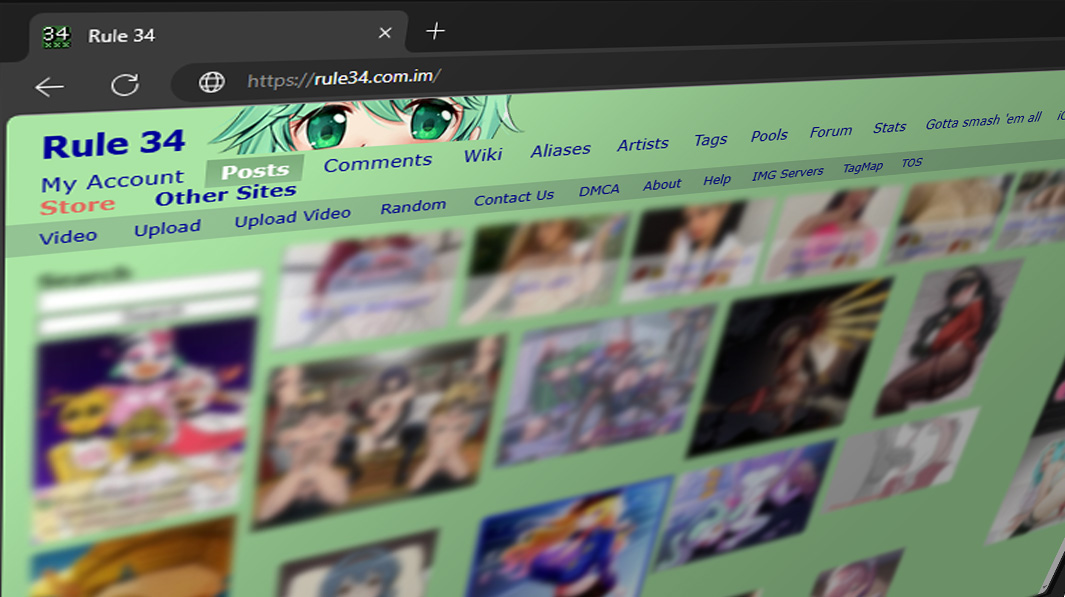
That simple joke has survived more than two decades of Internet culture. It moved from obscure webcomics and imageboards into mainstream meme vocabulary, while websites using the Rule34 name developed into large, tag-based media archives.
Understanding Rule34 today therefore requires separating three things that are often mixed together: the original Internet joke, the Rules of the Internet, and modern Rule34 websites.
What Is Rule34?
Rule34 is an Internet saying suggesting that if something exists, adult material based on it probably exists somewhere online.
It is best understood as Internet folklore rather than a literal rule. There is no organization enforcing it, no central Rule34 authority, and no single website that created or owns the concept.
The commonly cited origin is a webcomic created by Peter Morley-Souter, also known online as TangoStari. The comic appeared in 2003 and used the phrase that later evolved into the familiar Rule34 formulation. The expression subsequently became associated with collections known as the Rules of the Internet.
In everyday online conversation, people now use Rule34 in several ways:
- As the name of the original Internet meme.
- As shorthand for adult fan-created material.
- As a joke when an unexpectedly large fandom develops around something.
- As part of the names of several independent websites and applications.
- As a reference to the broader culture of fan art and booru image archives.
That last distinction matters. Searching for Rule34 online does not necessarily lead to one centralized service.
Maya Ellison, digital-culture researcher: “Rule34 survived because it works like folklore. People do not need to know where it started to understand the joke once someone explains it.”
What Does Rule34 Mean in Internet Culture?
The meaning of Rule34 is less complicated than its history.
It essentially jokes about the scale and creativity of Internet fandoms. Given enough people, enough time, and inexpensive publishing tools, almost every recognizable fictional universe, meme, game, character, or cultural phenomenon can inspire unofficial fan creations.
That is why Rule34 frequently appears in discussions surrounding:
- Anime
- Video games
- Cartoons
- Internet memes
- Comics
- Fandom communities
- Digital fan art
Importantly, Rule34 is not limited to anime. Anime became closely associated with it partly because anime and manga communities played a major role in the growth of tag-driven imageboards known as boorus.
Danbooru, launched in 2005, became one of the most influential examples of this format. Its collaborative tagging model helped establish conventions later adopted by many other booru-style archives.
Where Did Rule34 Come From?
The early history of Rule34 is a good example of how messy Internet history can be.
The widely cited story traces the phrase to Peter Morley-Souter's early-2000s webcomic. A 2003 comic used the numbered “Rule #34” joke after its creator encountered unexpected adult fan material online.
The phrase then circulated independently before becoming attached to the larger Rules of the Internet.
Those rules were not a serious code of conduct. They were a constantly changing collection of jokes, observations, catchphrases, and community references connected with Anonymous, IRC culture, Encyclopedia Dramatica, and especially 4chan.
By the middle of the 2000s, different versions of the Rules of the Internet were circulating across online communities. These lists often contained different wording and numbering, which is why searching for one definitive original list can produce conflicting results.
What Is the Connection Between Rule 34 and 4chan?
4chan did not necessarily invent the original Rule34 phrase, but it played an important role in spreading it.
The site's anonymous posting culture helped popularize many early Internet memes. Rule34 was incorporated into versions of the Rules of the Internet associated with 4chan and Anonymous communities.
This distinction is worth remembering:
Rule34 predates the best-known compiled Rules of the Internet lists.
The meme and the numbered rules eventually became so closely associated that many people now assume they originated at exactly the same time.
They did not.
Daniel Mercer, Internet-history analyst: “4chan's role was primarily amplification. The phrase already had a life of its own, but anonymous meme culture helped turn it from a niche joke into Internet vocabulary.”
When Was Rule34 Created?
The commonly cited starting point is 2003, when the Peter Morley-Souter webcomic appeared.
The wider Rules of the Internet culture developed later, particularly during the middle of the 2000s. By the end of that decade, Rule34 references had become widespread across imageboards, meme communities, fandom discussions, and general Internet culture.
| Period | Development |
|---|---|
| 2003 | An early Rule34 webcomic appears. |
| 2005–2006 | Booru and imageboard culture expands. |
| 2006–2007 | Rules of the Internet lists circulate widely. |
| 2008 onward | Rule34 becomes a recognizable Internet meme. |
| 2010s | The phrase spreads across mainstream social networks and fandoms. |
| 2020s | Rule34 remains common Internet slang while independent sites and apps continue using the name. |
Is Rule34 an Actual Internet Rule?
No.
There is no Internet governing body that created Rule34.
The Rules of the Internet are essentially collaborative Internet folklore. Different archives contain different versions, and some rules even contradict one another.
Rule34 happens to be one of the few entries that became famous independently of the larger list.
Think of it less like an official regulation and more like an old saying passed around online communities.
Rule34 vs. Booru: What Is the Difference?
This is one of the most commonly misunderstood parts of the topic.
Rule34 is a concept. A booru is a type of website.
A booru is an image archive organized primarily through tags rather than conventional folders or categories.
Each post can have many tags describing information such as:
- Artist
- Fictional character
- Series or franchise
- Media format
- Visual properties
- Content rating
- Source information
Danbooru helped establish this structure, and numerous later image archives adopted similar systems.
Some Rule34 websites use booru software or booru-inspired interfaces, which is why the two terms are frequently mentioned together.
How Does a Booru Tag System Work?
Imagine searching a normal photo website.
You might type one broad word and receive hundreds of loosely related results.
A booru instead allows multiple tags to describe the same image. Combining tags progressively narrows the results.
Advanced booru platforms may support:
- Negative tags
- Rating filters
- Artist tags
- Character tags
- Franchise tags
- File-type filters
- Date filters
- Resolution filters
- Popularity sorting
Some booru systems also support metadata searches for properties such as dimensions, upload date, score, file format, and content classification.
That structured search system is one reason boorus have remained popular even as mainstream social networks have grown.
How Does Rule34 Work Today?
There is no single system called Rule34.
Instead, websites using the name usually function as community-maintained media databases.
One of the best-known Rule34-branded platforms uses a post-and-tag structure. Individual posts can contain multiple tags, while registered users may gain additional features such as favorites, uploads, comments, or participation tools.
A typical booru-style workflow looks like this:
- Open the site's search interface.
- Enter one or more relevant tags.
- Refine results using additional tags or filters.
- Open an individual post to inspect its metadata.
- Use related tags to continue navigating the archive.
Adults choosing to visit sites containing mature material should also review the site's privacy settings, account options, filtering tools, and community guidelines beforehand.
Does Rule34 Require Registration?
The Rule34 meme obviously requires no account because it is simply a concept.
Individual Rule34 websites have their own account systems.
Many allow basic browsing without registration while reserving extra features for registered users. Those features may include favorites, commenting, uploading, custom filters, subscriptions, or community participation.
Account requirements can change over time, so users should always check the specific website they are using instead of assuming every Rule34 site works the same way.
Is Rule34 Free?
The meme itself is free to discuss, reference, or search for.
Many major booru-style archives can also be browsed without a paid subscription, although individual sites may use advertising, donations, premium functions, or other funding methods.
Do not assume that every site containing “Rule34” in its domain belongs to the same operator.
They frequently do not.
What Is the Official Rule34 Site?
Strictly speaking, there is no official website for the Rule34 meme.
That is probably the most useful answer to this question.
Rule34 existed as an Internet saying before today's major websites using the term became established.
Rule34.xxx is one prominent site using the name, but that does not make it the official owner of the Internet meme itself.
The distinction is similar to a meme becoming the name of multiple independent communities: one website can be popular without owning the underlying cultural concept.
Today, several independent sites, projects, viewers, and community tools use Rule34 terminology while operating separately from one another.
What Happened to Rule34?
Nothing singular happened to Rule34 because there is no single Rule34 organization to disappear.
The meme continues to circulate, while individual websites can experience redesigns, outages, domain changes, moderation changes, technical issues, or policy updates independently.
This explains why users sometimes ask “what happened to Rule34?” after encountering a temporary technical problem or finding that a particular site looks different.
The concept itself has never depended on one domain.
Is Rule34 Safe?
There are two different meanings of “safe” here.
First, content safety: Rule34-branded websites generally deal with mature material. They are therefore intended for adults rather than minors.
Second, there is technical safety.
No website should automatically be considered risk-free merely because it is well known. Adult-oriented websites can expose users to the same issues found elsewhere on the web, including intrusive advertising, misleading download buttons, tracking, phishing attempts, imitation pages, or suspicious third-party redirects.
Basic precautions include:
- Keep your browser and operating system updated.
- Do not install software simply because an advertisement says it is required.
- Avoid unknown browser extensions.
- Be cautious with executable files and APK downloads.
- Use unique passwords for accounts.
- Review privacy settings before registering.
- Do not provide unnecessary personal information.
Maya Ellison, digital-culture researcher: “Website reputation and download safety are two separate questions. Even when a site itself is familiar, a random extension, APK, advertisement, or mirror can come from an entirely different operator.”
Does Rule34 Have Viruses?
Rule34 is a meme, so Rule34 itself obviously cannot contain malware.
For websites carrying the name, the better question is whether a specific domain, advertisement, file, extension, or application is trustworthy.
It is misleading to promise that any large user-generated website is permanently free from security problems. Conditions can change, advertising networks may come from outside providers, and imitation websites may copy familiar branding.
The safest approach is simple: treat unexpected downloads as suspicious and avoid installing files whose publisher you cannot verify.
Is Rule34 Safe on Mobile?
Using a modern mobile browser does not fundamentally change what Rule34 is, but phones introduce a few practical concerns.
Mobile users should be especially careful about:
- Fake download prompts
- Notification-permission requests
- Unknown APK files
- Misleading “install app” advertisements
- Cloned domains
- Pop-ups that imitate operating-system warnings
Using the normal browser version generally avoids the need to install extra software.
What Is the Rule34 App?
There is no single universal “official Rule34 app” representing the Rule34 meme.
Several third-party projects use similar names.
Some projects operate as Progressive Web Apps that can browse multiple booru sources. Others are Android viewers or community-built clients designed to display content from existing booru databases.
Many of these applications are independent projects rather than products created by the websites they access.
That distinction becomes important when somebody searches for a “Rule34 download.”
Installing an APK found through a random search result can carry considerably more risk than opening a normal website in a browser.
Is Rule34 Safe to Download?
The phrase itself cannot be downloaded.
If someone refers to downloading a Rule34 application, viewer, downloader, or APK, verify the software independently before installing it.
A sensible checklist is:
- Identify the developer.
- Find the project's original publishing page rather than an unknown mirror.
- Check whether the developer clearly explains who operates the application.
- Review requested permissions.
- Avoid modified APKs from unknown upload sites.
- Scan downloaded files with reputable security tools.
- Prefer a browser or transparent open-source project when practical.
This advice applies to almost any unofficial media app, not merely Rule34 software.
Does Rule34 Have Age Restrictions?
The meme itself has no technical age gate.
Websites containing adult material do.
Requirements vary between platforms and regions, but users should expect adult-oriented Rule34 sites to restrict access by minors and to maintain rules designed for mature audiences.
Why Is Rule34 Connected With Anime?
Anime did not create Rule34, but the two cultures overlap heavily.
Early booru communities were strongly influenced by anime, manga, Japanese fan art, and creator communities.
Danbooru itself is primarily focused on anime-style artwork and helped popularize collaborative tagging systems for large image collections.
Many later boorus inherited similar structures.
As a result, someone encountering Rule34 through an anime fandom may reasonably assume it is an anime-specific term.
It is not.
Rule34 can be applied as an Internet joke to practically any subject.
Why Is Rule34 Mentioned on Twitter or X?
On X and other social networks, Rule34 usually functions as shorthand.
Someone might mention it when:
- Joking about the size of a fandom
- Reacting to unexpected fan art
- Discussing Internet meme history
- Referencing old imageboard culture
- Discussing fan-created media
In that context, writing “Rule34” is much faster than explaining the entire meme every time.
The same shorthand appears on Reddit, Discord, forums, gaming communities, and comment sections.
What Are Rule34 Alternatives?
The phrase Rule34 alternatives can mean several different things depending on what a person actually wants.
Some users are looking for another booru with stronger search tools. Others simply want large fan-art databases. Some want anime-focused communities, while others specifically want non-adult image archives.
| Platform Type | Main Advantage | Important Consideration |
|---|---|---|
| Rule34-style boorus | Large fandom-oriented archives and detailed tagging | Mature material may be prominent |
| Danbooru-style platforms | Detailed metadata, character tags, artist tags, and advanced search | Different content ratings may appear |
| Safebooru-style platforms | Anime-oriented image browsing with a stronger focus on non-adult material | Catalog size and tagging depth may vary |
| General art communities | Broader creator communities and original artwork | Tagging may be less standardized than a traditional booru |
Which Rule34 Alternatives Have Better Tag Systems?
“Better” depends on what you actually want.
If your primary goal is finding fan art through highly structured metadata, Danbooru-style platforms are especially notable because they organize posts through artist, character, franchise, general, rating, and metadata tags.
Advanced systems may also let users search by:
- Image dimensions
- File format
- Upload date
- Popularity score
- Character combinations
- Artist identity
- Franchise
- Content classification
For users who want the booru browsing experience while avoiding adult-focused collections, Safebooru-style communities may be a more suitable option.
Why Has Rule34 Lasted So Long?
Most Internet jokes disappear quickly.
Rule34 did not.
There are several reasons.
First, the basic idea is easy to understand. You do not need to know 4chan history or early web culture to understand the joke.
Second, it continuously applies to new fandoms. Every new game, movie, television show, meme, fictional universe, and viral character gives people another reason to repeat the phrase.
Third, Rule34 moved beyond being a punchline and became a descriptive piece of Internet vocabulary.
Finally, the phrase is short.
Two words and a number can communicate an entire cultural reference.
That is powerful meme design, even if nobody intentionally designed it that way.
Rule34 and the Evolution of Online Fandom
Looking beyond the adult-content association reveals something more interesting about Rule34: it is also a story about how digital fandom changed.
Early Internet communities were scattered across forums, IRC channels, personal sites, imageboards, and small fan archives.
Modern fandom moves across X, Reddit, Discord, TikTok, image repositories, streaming platforms, creator communities, and private groups almost instantly.
Rule34 followed that evolution.
The meme began when creating and distributing fan art required considerably more friction than it does today. Digital drawing tools, social platforms, tagging systems, generative tools, and huge searchable archives have since made fan-created media easier to produce and locate.
In that sense, Rule34 accidentally became a commentary on the infinite remixability of online culture.
Daniel Mercer, Internet-history analyst: “The most interesting part of Rule34 is not the adult material. It is the assumption behind the joke: anything that gains an audience can be copied, transformed, remixed, cataloged, and turned into fandom.”
How to Understand Rule34 Without Confusing the Meme and the Websites
A simple mental model makes the topic much easier to understand.
- Rule34 began as a meme. It refers to a humorous observation about Internet fan culture.
- The Rules of the Internet helped spread it. Anonymous communities and imageboards amplified the expression.
- Booru systems provided the technology. Tag-based archives made huge collections easy to search.
- Websites later adopted the name. These sites are individual platforms rather than the origin of the meme.
- Apps and viewers appeared afterward. Many are third-party tools designed to browse one or more booru databases.
Once these layers are separated, questions about the Rule34 meaning, Rule34 origin, Rule34 sites, Rule34 apps, and Rule34 alternatives become much easier to answer.
Conclusion
Rule34 began as an early Internet joke and eventually became one of the web's longest-lasting pieces of meme vocabulary.
Its history runs through webcomics, 4chan, Anonymous culture, the Rules of the Internet, anime fandoms, booru image archives, social networks, and modern tag-based communities.
The most important distinction is simple: Rule34 is a meme and cultural concept, not one official website.
Sites using the Rule34 name appeared later and developed their own communities, accounts, tagging systems, moderation practices, and technical features.
Anyone researching Rule34 today should therefore separate the history of the meme from the websites that use its name and, when visiting any adult-oriented service, pay attention to age restrictions, privacy, downloads, account security, and browser safety.
Frequently Asked Questions About Rule34
What is Rule34?
Rule34 is an Internet meme suggesting that virtually any subject can eventually inspire adult fan-created material. It originated in early-2000s web culture and later became associated with the Rules of the Internet.
Where did Rule34 come from?
The most widely cited origin is a 2003 webcomic by Peter Morley-Souter, also known as TangoStari. The phrase later spread through imageboards and became incorporated into Rules of the Internet lists associated with 4chan and Anonymous culture.
Is Rule34 a real Internet rule?
No. Rule34 is Internet folklore rather than an official regulation. The Rules of the Internet were community-created jokes and observations, and multiple versions of the list exist.
Is there an official Rule34 website?
No single website is the official home of the Rule34 meme. Several websites use the term, but the meme predates those platforms and is not controlled by one service.
Does Rule34 require an account?
The meme requires no account. On individual websites, requirements vary. Many platforms allow public browsing while accounts provide extra features such as favorites, comments, uploads, subscriptions, or saved searches.
Is Rule34 safe?
Rule34-branded websites may contain adult material and are intended for mature audiences. Technical safety depends on the specific domain, advertisements, downloads, browser extensions, and third-party software being used.
What is a safer Rule34 alternative for general fan-art browsing?
Users interested mainly in tag-based anime and fan-art browsing can consider Safebooru-style communities or other non-adult art archives. These platforms may provide familiar tagging and search features while focusing more heavily on general-audience material.